OMNA TIGRAY – FEBRUARY 2023 SITUATION REPORT

EXECUTIVE SUMMARY

It has been 27 months since the deadliest war of the 21st century broke out in Tigray, Northern Ethiopia. Officially declared on November 4, 2020, this war in which Ethiopian National Defense Forces (ENDF), Eritrean forces, and Amhara forces launched an all-out attack against the 7+ million people of Tigray, has killed an estimated 600,000 to 800,000 people. A key strategy of the Ethiopian government’s war has been a complete telecommunication and reporting blackout, which has served to conceal the extent of the devastation in Tigray. However, the limited information available provides a glimpse into the scale of the catastrophe. Tens of thousands of people, including children, have sustained serious injuries from indiscriminate shelling, bombing, and landmines planted by Ethiopian and Eritrean forces. Tens of thousands more have been subjected to heinous systematic and widespread Conflict-Related Sexual Violence (CRSV), including rape, gang rape, and sexual slavery. Millions of people have been displaced from their homes in an organized campaign of ethnic cleansing and have sought refuge in neighboring countries as well as makeshift shelters in cities across Tigray, where they are unable to access humanitarian and medical aid. The Ethiopian government’s siege and blockade have halted the flow of humanitarian supplies, goods and services, and money into Tigray for over two years, leaving seven million people without a way to sustain life.

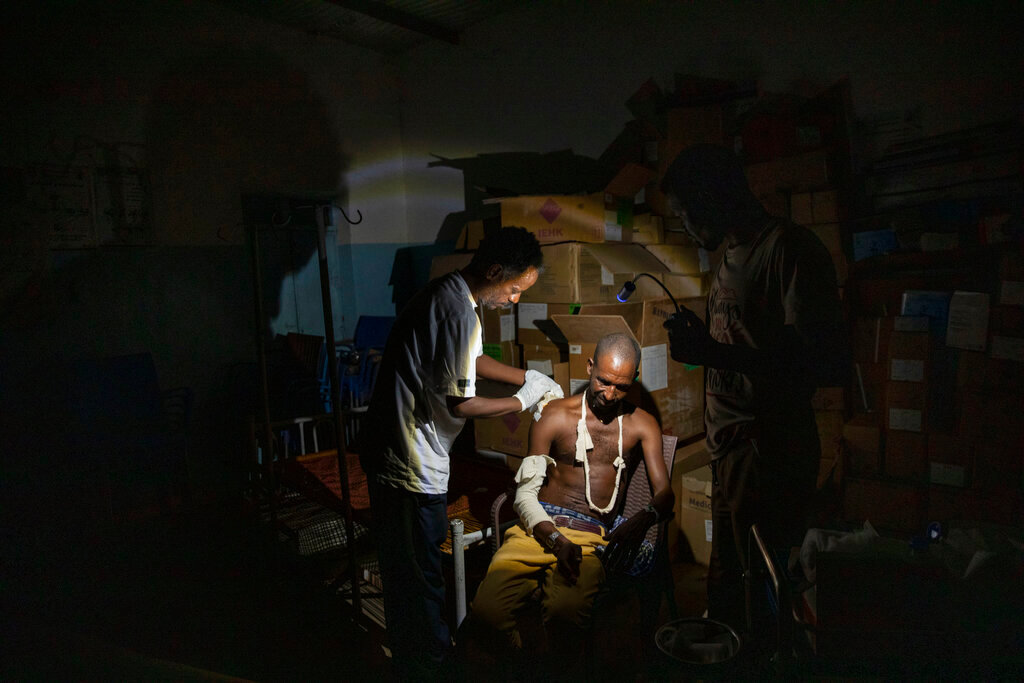
In November 2022, representatives of the Ethiopian and Tigrayan governments signed a Cessation of Hostilities Agreement (CoHA) in South Africa. This agreement promised to alleviate the human suffering in Tigray and build a path toward sustainable peace and justice. However, since the CoHA, there has been very little improvement in the conditions of life in Tigray. While the CoHA was supposed to expedite the unfettered flow of humanitarian supplies into Tigray, the aid that has been entering the region is extremely limited in comparison to the scale of the need. This is especially the case for much-needed medical supplies, which have been trickling into the region at an extremely slow pace. Health professionals in Tigray share that the supplies they have received are nowhere near enough to address the healthcare catastrophe they are attempting to manage.

The CoHa additionally promised to facilitate the removal of non-ENDF forces from Tigray. Eritrean and Amhara forces occupying large swaths of Tigray have been accused of the most heinous crimes against civilians, and their immediate removal is vital for ending the atrocities. In January 2023, Eritrean forces made a show of leaving some parts of Tigray, waving their flag and displaying grotesque messages celebrating the atrocities they committed against men, women, and children in Tigray. Some of these messages gloated over the war crimes, crimes against humanity, and acts of genocide the Eritrean army committed in Tigray, while others declared, “We are savages to our enemies.” Despite the Ethiopian government’s January 2023 statement that non-ENDF forces have left Tigray, eyewitness accounts, photographic evidence, and a statement by U.S. Ambassador to the United Nations (UN) Linda Thomas-Greenfield all confirm their continued presence in Tigray. It is also to be remembered that the Ethiopian government repeatedly denied the presence of Eritrean forces in Tigray throughout 2020 and 2021. The continued presence of these invading forces in Tigray not only jeopardizes the well-being of Tigrayan civilians but poses a direct threat to the nascent peace process. As such, the international community must call for the immediate and verified withdrawal of all invading forces from all parts of Tigray.

OMNA TIGRAY – JANUARY 2023 SITUATION REPORT

EXECUTIVE SUMMARY

It has been 26 months since the Ethiopian government declared a genocidal war on Tigray. In that time, the Ethiopian National Defense Forces (ENDF), Eritrean Defense Forces (EDF) and regional forces from the neighboring Amhara region have committed war crimes, crimes against humanity, and acts of genocide throughout Tigray. Due to the Ethiopian government’s communications blockade, we have yet to uncover the full scale of the atrocities unleashed over the last two years. However, reports indicate that over 600,000 thousand people have died due to the war since 2020. Additionally, tens of thousands have been victims of systematic and widespread Conflict Related Sexual Violence (CRSV). While over 70,000 have been forced to leave their home and flee to neighboring Sudan, there are over 2 million Internally Displaced People (IDPs) in Tigray, many displaced several times, taking shelter in abandoned buildings and schools. Many of the IDPs come from areas near the Eritrean border and from Western Tigray, which has been a site of egregious ethnic cleansing. Finally, due to the Ethiopian government’s campaign of destruction, ongoing siege, and aid blockade, a devastating famine has taken hold in Tigray. With malnutrition rates at emergency levels, especially among children, pregnant women, nursing mothers, the elderly, and other vulnerable populations, hundreds of thousands of lives are in jeopardy. Unless reliable and unrestricted aid flow is restored in Tigray immediately, millions risk severe malnutrition and starvation related deaths.

As highlighted in the December Situation report, in the last week of October 2022, representatives from the Ethiopian and Tigrayan governments met in South Africa to negotiate a Cessation of Hostilities of Agreement (CoHA). Since this meeting, the representatives have met twice in Nairobi, Kenya to work out the implementation of the Agreement. In an unprecedented development, on December 26, 2022, a high-level delegation of the Ethiopian federal government visited Mekelle, Tigray, to hold talks with leaders of the Tigray regional government. These are important developments that can facilitate an end to the unimaginable suffering the people of Tigray are still enduring. However, there are several important points to note. First, essential services including electricity, internet, and banking remain inaccessible for the overwhelming majority of the Tigrayan people. Therefore, it is of paramount importance that the Ethiopian government lift its deadly siege and restore essential services across the region. Second, while two sets of leaders who were at war a few months ago coming together to hold discussions is an encouraging step, it must be followed up with action that can deliver relief to the millions of people they represent.

As such, leaders of the Tigrayan and Ethiopian governments must work together to ensure the immediate and verified withdrawal of Eritrean forces who are still marauding across Tigray committing innumerable atrocities. Third, it must be emphasized that peace is not a substitute for justice and accountability, but rather, a requirement for both. Therefore, ensuring that justice by way of investigations is delivered for millions in Tigray who have endured war crimes, crimes against humanity, and genocide must be part and
parcel of the peace process.

OMNA TIGRAY – DECEMBER 2022 SITUATION REPORT

EXECUTIVE SUMMARY

December 2022 marks the 25th month of the genocidal war on Tigray, the world’s largest and deadliest war. The last two years of attacks by Ethiopian National Defense Forces (ENDF), Eritrean Defense Forces (EDF), and Amhara regional forces and militia have devastated this region of about 7 million people in a myriad of ways. Since the onset of the war in November 2020, an estimated 600,000 people have died due to bombings, shellings, massacres, man-made famine, and siege. Over 60,000 Tigrayans have been forced to seek refuge in Sudan, while over two million are internally displaced. Widespread and systematic Conflict-Related Sexual Violence (CRSV) has been unleashed by Ethiopian, Eritrean, and Amhara forces, affecting at least tens of thousands of survivors in the region. The man-made famine, which has already taken the lives of tens of thousands, threatens the health and wellness of thousands more, especially children, pregnant women, and nursing mothers. Large-scale looting and destruction have destroyed the region’s health infrastructure, leaving the vast majority of health facilities in Tigray non-functional. Due to the communication and information blockade enacted by the Ethiopian government, only a small percentage of the atrocities unleashed in Tigray have been documented. Yet, this limited data provides a glimpse into the depth and scale of atrocities Ethiopian, Eritrean, and Amhara forces have committed.

In the last week of October 2022, after nearly two years of fighting, representatives from the Ethiopian and Tigrayan governments met in South Africa to negotiate a Cessation of Hostilities Agreement (CoHA). This agreement was signed on November 2, 2022, and was supposed to go into effect immediately. The CoHA promises to alleviate the unimaginable suffering in Tigray by stipulating the imperative for protecting civilians, allowing humanitarian aid into Tigray, and restoring essential services. As underscored by multiple speakers during the signing ceremony in Pretoria, the agreement is the beginning of a long and complex process that the Ethiopian federal government and Tigrayan regional government must undertake to alleviate the suffering in Tigray and achieve lasting peace. The CoHA’s effectiveness in doing so depends entirely on the willingness and ability of signatories to abide by and respect its terms. Unfortunately, in the month since the signing of this deal, there has not been adequate action to meet the expectations outlined in the agreement. As shown in the following section, a month after the Pretoria Agreement (CoHA) and two weeks after the subsequent agreement in Nairobi, conditions in Tigray have only worsened. Without an effective enforcement mechanism and independent monitors, the agreements cannot bring the results intended. It is, therefore, incumbent on the African Union (AU) and all regional and international partners to ensure that signatories abide by the terms of the agreements.

NOVEMBER 2022 SITUATION REPORT – 2 YEARS OF GENOCIDE

SITUATION REPORT November 2022 EXECUTIVE SUMMARY November 2022 marks two years since the start of the genocidal war on Tigray, the deadliest conflict in the world today. It officially began when the Ethiopian government, allied with the Eritrean Government and regional forces from neighboring Afar and Amhara regions, declared war on the seven million people and government of Tigray on November 4, 2020.

Over the last two years, an estimated 600,000 Tigrayans have died and over 60,000 Tigrayans have fled as refugees to Sudan. Ethiopian, Eritrean and Amhara forces have committed horrific atrocities including ethnic cleansing, rape as a weapon of war and massacres. The situation is even more dire for the Irob and Kunama peoples, who are minority groups within Tigray. For more than a year, the Ethiopian government has also enacted a deadly siege, blocking the flow of aid into the region. Hundreds of thousands in Tigray are in a man-made famine, while millions more are on the brink.

A peace agreement was signed between the Ethiopian government and Tigray People's Liberation Front on November 3, 2022. However, the Ethiopian government continues to commit atrocities in Tigray. It is therefore vital that Eritrean forces are immediately removed from Ethiopia and that the Ethiopian government’s actions align with its rhetoric.
NOVEMBER 2022 SITUATION REPORT - 2 YEARS OF GENOCIDE
The impact of a rocket on Dejena hotel in Shire, northern Tigray, in November 2020. Aerial attacks and shelling took place across Tigray at the start of the war to terrorize the population into submission. Indiscriminate shelling
and bombardment
One-year-old Eldana. One of the victims of the Ethiopian government’s airstrike on the busy Togoga marketplace on June 22, 2021. Over 60 people were killed.

Tselat, Eldana’s mother, waits while her daughter receives treatment after being hurt in the airstrike.
Indiscriminate shelling
and bombardment
Tigrayan civilians faced clouds of black smoke from the aftermath of an airstrike in Mekelle, Tigray’s capital, on October 20, 2021. Tigrayan civilians faced clouds of black smoke from the aftermath of an airstrike in Mekelle, Tigray’s capital, on October 20, 2021. This attack took place amid an intensification of aerial attacks in October 2021, as Tigray Defense Forces were making military gains. Ethiopian forces turned to committing atrocities against civilians as a strategy to win a war being lost on the ground.
Damage from an Ethiopian government airstrike which hit a kindergarten in Mekelle, Tigray, and resulted in the death of several children on August 26, 2022. This attack came as the Ethiopian government broke a 5-month-long ceasefire. Damage from an Ethiopian government airstrike which hit a kindergarten in Mekelle, Tigray, and resulted in the death of several children on August 26, 2022. A child after being bombed by the Ethiopian government while sheltering in a camp for internally displaced people (IDPs). The Ethiopian government has bombed IDP camps on more than one occasion, constituting a war crime. In this instance, on January 7, 2022, in Dedebit, Northwestern Tigray, 56 people were killed. A child after being bombed by the Ethiopian government while sheltering in a camp for internally displaced people (IDPs). The Tekeze River is a critical site of transit for those escaping the deadly violence and ethnic cleansing occurring in Western Tigray. After crossing the river, Tigrayans are processed as refugees in UNHCR sites in Sudan. Displacement The Tekeze River is a critical site of transit for those escaping the deadly violence and ethnic cleansing occurring in Western Tigray. Hamdayet, Sudan. When Ethiopian and allied forces first invaded Tigray from all sides, tens of thousands of people flooded into Sudan within two weeks. Refugee camps were not set up and equipped to shelter and care for traumatized and wounded Tigrayans coming across the border. Many of their basic needs remain unmet today. Hamdayet, Sudan. When Ethiopian and allied forces first invaded Tigray from all sides, tens of thousands of people flooded into Sudan within two weeks. Many health professionals displaced by the genocidal war on Tigray continue to serve their communities in refugee camps with the limited resources available. Many Tigrayans in Sudan require medical care due to physical attacks, including weaponized sexual violence. Dr. Tewodros Tefera,
Refugee doctor
Abraha, formerly a resident of Mai Kadra in Western Tigray, fled to Sudan after losing his wife to birth-related health complications. Abraha made the journey to Sudan with five children, two of whom were newborn twin girls. Abraha, formerly a resident of Mai Kadra in Western Tigray, fled to Sudan after losing his wife to birth-related health complications. Forcibly displaced Tigrayan men sit outside at night attempting to secure network connection on their cell phones. Tigrayan families have been separated by borders and the ongoing telecommunications blackout within Tigray, preventing those in Sudan from connecting with loved ones to confirm their safety and security. Forcibly displaced Tigrayan men sit outside at night attempting to secure network connection on their cell phones. In Tigray, IDPs depend on their host communities to meet their basic needs; however, as Tigray has been suffocated under a brutal siege and a humanitarian blockade since July 2021–host communities struggle to meet their own needs. In Tigray, IDPs depend on their host communities to meet their basic needs; Tigray has been suffocated under a brutal siege and a humanitarian blockade since July 2021. A Tigrayan woman, displaced from her home to a refugee camp in Sudan, comforts her child suffering from malnutrition in December 2020. Food insecurity in Tigray has only worsened as the war and humanitarian blockade has continued for 2 years, while food shortages in refugee camps have been reported. Famine A Tigrayan woman, displaced from her home to a refugee camp in Sudan, comforts her child suffering from malnutrition in December 2020. Tigsti Mahderekal, 20 days old, with her mother Abeba Gebru from the village of Getskimilesley in a medical treatment tent in Abbi Adi, May 2021. Abeba walked 12 days to get Tigsti to the clinic, saying of the journey, “she only survived because I held her close to my womb and kept hiding during the exhausting journey.” Tigsti Mahderekal, 20 days old, with her mother Abeba Gebru from the village of Getskimilesley in a medical treatment tent in Abbi Adi, May 2021. Natan receives high-energy biscuits to prevent malnutrition while sheltering at Meserete high school in Mekelle, June 2021. Natan Hailay (7-months-old) and his family were displaced from their home in Setit Humera, Western Tigray. Natan Hailay (7-months-old) receives high-energy biscuits to prevent malnutrition while sheltering at Meserete high school in Mekelle, June 2021. His family were displaced from their home in Setit Humera, Western Tigray. Humanitarian services to address food insecurity in the region became even more limited in July 2021, after the Ethiopian government and its allies imposed a complete siege.
Young women in the village of Merebmieti, South of Mekelle, May 2021. Ethiopian Prime Minister Abiy Ahmed declared war in November 2020, shortly before the harvest season, which disrupted agricultural activities. Disruptions continued as farming was prohibited in occupied areas and Ethiopian authorities prevented seeds and fertilizers from entering the region. Young women in the village of Merebmieti, South of Mekelle, May 2021. Ethiopian Prime Minister Abiy Ahmed declared war in November 2020, shortly before the harvest season, which disrupted agricultural activities. Brkti Gebrehiwot (20 years old), and her one year and eight-month-old son Aamanuel Merhawi, who is suffering from severe acute malnutrition at a hospital in Wukro, July 2021.

Brkti and Aamanuel are from the town of Agulae, which was occupied by Eritrean troops who have been especially brutal and destructive in accomplishing their genocidal project.
A severely malnourished baby receives care at a UNICEF-support health unit at Ayder Referral and Specialized hospital in Mekelle, Tigray, 2021 Abrahaley Minasbo,
survivor of the Mai-Kadra massacre
Mothers and children line up for UNICEF-run health screenings in Adikeh, Wajirat district, July 2021. Women mourning the loss of their loved ones who were victims of a massacre in the village of Dengolat, Tigray, perpetrated by Eritrean troops. Massacres The mother at the center of the picture holds up pictures of the children she lost in the Mariam Dengolat massacre. Young men were especially targeted by invading forces–an order which the Eritrean government has updated to include all males in Tigray in their most recent offensive. The mother at the center of the picture holds up pictures of the children she lost in the Mariam Dengolat massacre. Fetlework Amaha (left) and Abeba Girmay (center) sit on the grave of their loved ones at Abune Aregawi church, in Abiy Addi, Tigray. One of Fetlework’s cousins and four of Abeba’s nephews were murdered while farming on the outskirts of Abiy Addi. Families were not allowed to mourn the deaths of their loved ones. Fetlework Amaha (left) and Abeba Girmay (center) sit on the grave of their loved ones at Abune Aregawi church, in Abiy Addi, Tigray. An elderly woman having fled from the town of Shire to the city of Axum to seek safety, wounded during an attack on the city, sits with her head bandaged. Days later she died of her injuries. She fled the Axum massacre, in which Eritrean soldiers killed “many hundreds” according to Amnesty International, only to be attacked in Shire. Families were often forbidden from holding religious funerals for their loved ones and had to bury people in mass graves whenever they could. Mass
Graves
Araya Gebretekle is pictured mourning his four sons, who were executed while harvesting millet in his fields, near the town of Abiy Addi. A Mourning Father Araya Gebretekle is pictured mourning his four sons, who were executed while harvesting millet in his fields, near the town of Abiy Addi. A Mourning Father Senayit* was raped by soldiers on two separate occasions - in her home in Edagahamus, and as she tried to flee to Mekelle with her 12-year-old son. The second time, she was pulled from a minibus, drugged, and brought to a military base, where she was tied to a tree and sexually assaulted repeatedly over the course of 10 days. At one point, she awoke to find her son, along with a woman and her new baby, dead at her feet. Conflict-Related
Sexual Violence
Senayit* was raped by soldiers on two separate occasions - in her home in Edagahamus, and as she tried to flee to Mekelle with her 12-year-old son. The second time, she was pulled from a minibus, drugged, and brought to a military base, where she was tied to a tree and sexually assaulted.
A 40-year-old woman held captive and repeatedly raped by 15 Eritrean soldiers over a period of a week in a remote village near the Eritrea border, photographed at a hospital in Mekelle, in May 2021.

“They talked to each other. Some of them: ‘We kill her.’ Some of them: ‘No, no. Rape is enough for her,’” she recalls. She said one of the soldiers told her: "This season is our season, not your season. This is the time for us."
A 40-year-old woman held captive and repeatedly raped by 15 Eritrean soldiers over a period of a week in a remote village near the Eritrea border, photographed at a hospital in Mekelle, in May 2021.

“They talked to each other. Some of them: ‘We kill her.’ Some of them: ‘No, no. Rape is enough for her,’” she recalls. She said one of the soldiers told her: "This season is our season, not your season. This is the time for us."
Soldiers raped Shewit in front of her children. “I told them, ‘I am HIV-positive. Be careful, please don’t do this.’ They didn’t care. They didn’t even use protection.”

They said, “The Tigrayan race must be eliminated.”
Sexual violence as
a weapon of genocide
Soldiers raped Shewit in front of her children. “I told them, ‘I am HIV-positive. Be careful, please don’t do this.’ They didn’t care. They didn’t even use protection.” Sexual violence as
a weapon of genocide
A Tigrayan woman who was gang raped by Amhara fighters, stands for a portrait in eastern Sudan, near the border with Tigray, Ethiopia, on March 23, 2021. 18-year-old Mona Lisa is pictured as she recuperates in a hospital in Mekelle in April 2021. The teenager has survived an attempted rape that left her with seven gunshot wounds and amputations. 19-year-old Rahel is at Abiy Addi Hospital because she fell pregnant after Ethiopian soldiers raped her. “They did this to eliminate Tigrayans, and for the generations of babies delivered to be Ethiopian, because they don’t want the next generation to be Tigrayan,” she says. “I am waiting to abort this baby”. 19-year-old Rahel is at Abiy Addi Hospital because she fell pregnant after Ethiopian soldiers raped her. Ethnic cleansing Satellite image collected of the town of Adebai, in Tigray’s western administrative zone. Amnesty International’s analysis shows an overview of locations of damage and a possible detention site. From the start of the war in November 2020, Amhara forces started their ethnic cleansing campaign mass arresting and detaining Tigrayans. In these sites, Tigrayans were tortured and executed. Satellite image collected of the town of Adebai, in Tigray’s western administrative zone. From the relative stability of a shelter near the Sudan-Ethiopia border, Abrahaley Minasbo, a Tigrayan survivor of the Mai-Kadra massacre, shows his wounds sustained from machetes yielded by Fano Amhara militias, December 2021. Abrahaley Minasbo,
survivor of the Mai-Kadra massacre
Abrahaley Minasbo,
survivor of the Mai-Kadra massacre
Per an investigation conducted by Human Rights Watch and Amnesty International, these sketches were developed based on testimonies. (Left) Amhara security forces rounded up Tigrayans in Western Tigray and forcibly transferred them east, towards Northwestern Tigray. (Right) Mesfin, one of the men rounded up, said: “They took us… somewhere around the bridge, a kind of field, but we were on the ground. ... We were facing a hill.” Western Tigray Per an investigation conducted by Human Rights Watch and Amnesty International, these sketches were developed based on testimonies. (Left) Amhara security forces rounded up Tigrayans in Western Tigray and forcibly transferred them east, towards Northwestern Tigray. CNN documents Tigrayans in Sudan collecting bodies of victims of ethnic cleansing in Western Tigray from the Tekeze River–many of which show signs of torture and had their hands tied behind their backs. At the time of the investigation, the team of excavators had collected 60 bodies. CNN documents Tigrayans in Sudan collecting bodies of victims of ethnic cleansing in Western Tigray from the Tekeze River–many of which show signs of torture and had their hands tied behind their backs. In remembrance of massacre victims from Tigray’s Irob minority, a man is holding a poster with pictures of those slain by Eritrean forces at the beginning of the war. In early November 2020, 75 individuals from Tigray’s Irob minority were massacred. An estimated 35,000 Irob people live in semi-arid mountainous areas in Tigray state's northeastern corner at the Ethiopia-Eritrea border. Video(right) #IrobMassacre victims' Families Witness Accounts. Video #IrobMassacre victims' Families Witness Accounts #IrobMassacre victims' Families Witness Accounts List of Irob disappeared by Eritrean forces during the 1998 to 2000 Ethio-Eritrean war, as well as those massacred during the Irob massacre that took place between January 4th and 8th, 2021 with a backdrop of mountains of Irob. Members of the minority Kunama community in the Tigray region who were displaced after coming under heavy attacks were featured on the local DW TV. The Tigrayan Kunamas who number about 10,000 have been targeted by Eritrean forces with the extent to exterminate the population. Many have been displaced suffering without food. Members of the minority Kunama community in the Tigray region who were displaced after coming under heavy attacks were featured on the local DW TV. The Tigrayan Kunamas who number about 10,000 have been targeted by Eritrean forces A convoy of World Food Programme trucks stand still on a winding road in the mountains of Afar. The siege imposed on Tigray has prevented humanitarian aid from entering the region, exacerbating a deadly food and healthcare crisis. A convoy of World Food Programme trucks stand still on a winding road in the mountains of Afar. The siege imposed on Tigray has prevented humanitarian aid from entering the region. Siege Health facilities across Tigray were deliberately looted and vandalized by occupying Ethiopian and Eritrean forces. Militarized forces seized ambulances, broke windows and doors, smashed medical equipment such as ultrasound machines and monitors, and destroyed health facilities with fire and rockets. Health facilities across Tigray were deliberately looted and vandalized by occupying Ethiopian and Eritrean forces. A young woman carries a bundle of sticks on her back and the lid to a clay fire pit in her right hand, walking toward an armored military tank parked along her route. The siege on Tigray, combined with the disruption of electricity and telecommunication services, has forced the civilian population into darkness. A young woman carries a bundle of sticks on her back and the lid to a clay fire pit in her right hand. The disruption of electricity and telecommunication services, has forced the civilian population into darkness. A woman looks after a patient lying in a bed in a hospital emptied of medical devices and medicines. Tigray’s healthcare infrastructure was devastated by Ethiopian and Eritrean forces who looted and destroyed healthcare centers and hospitals across the region. A woman looks after a patient lying in a bed in a hospital emptied of medical devices and medicines. An injured girl is woken by her mother at Ayder hospital in Mekelle, the capital of Tigray region, where thousands have died as a result of a two-year siege. Since the end of August 2022, the Ethiopian government and its allies have intensified their aerial attacks and shelling, bombing civilians. An injured girl is woken by her mother at Ayder hospital in Mekelle, the capital of Tigray region, where thousands have died as a result of a two-year siege. Children requesting food and medicine at a rally in Mekelle, Tigray, in December 2021. Children have been among the most impacted by the genocidal war and siege on Tigray. Malnutrition rates far exceed emergency levels and there is no treatment available for it. Children requesting food and medicine at a rally in Mekelle, Tigray, in December 2021. A warehouse in Addis Ababa having served as a detention center for Tigrayans, February 2021. As prisons were full, makeshift detentions centers had to be established to detain the thousands of Tigrayans. A warehouse in Addis Ababa having served as a detention center for Tigrayans, February 2021. Mass Arrests
and Detention
Image from inside a detention camp at Aba Samual Prison in Addis Ababa provided to Reuters by a former prisoner. Those detained are confined to crowded spaces, forced to sleep standing up, with no security and privacy. There are limited, if any, sanitation facilities. Image from inside a detention camp at Aba Samual Prison in Addis Ababa provided to Reuters by a former prisoner. Groups formed to check people's I.D.s for ethnicity in Addis Ababa during the State of Emergency November 2021. Civilians, former friends, and neighbors of Tigrayans across Addis Ababa, became vigilantes, checking ethnicity and reporting their Tigrayan neighbors. Groups formed to check people's I.D.s for ethnicity in Addis Ababa during the State of Emergency November 2021. CALL TO ACTION Blocking World Bank and International Monetary Fund from funding Ethiopia until the country is able to bring peace to the region of Tigray;

Support for proposed U.S. legislation⁠—H.R. 6600 and S.3199⁠—so that they may pass through Congress to hold perpetrators of crimes committed accountable;

Implementation of Magnitsky Sanctions on the Ethiopian, Eritrean and Amhara government officials to increase pressure to end the siege, as well as trade and investment restrictions in both countries;

Provision of sufficient resources for the International Commission of Human Rights Experts on Ethiopia, including financial, technical, and staffing resources; and

Former Kenyan President Kenyatta to be appointed as the lead mediator in negotiations, with support from distinguished African leaders, in discussions moving forward.
We continue to call for the following:
CALL TO ACTION CONT. Immediate humanitarian access into all of Tigray;

Immediate internationally monitored and verifiable withdrawal of Ethiopian, Eritrean, and Amhara forces from all parts of Tigray and the restoration of pre-war territorial boundaries;

Immediate restoration of all essential services, including banking, electricity, telecommunications, transportation, and trade in Tigray;

Immediate protection of Tigrayans who are facing ethnic cleansing in occupied Western Tigray and an end to the state-sanctioned ethnic profiling and ethnically-motivated attacks against Tigrayans living across Ethiopia;

Release of all Tigrayans detained on the basis of their identity, including journalists, 22,000 Tigrayan ENDF members, and Tigrayans deported from Saudi Arabia;

An arms embargo and a limited no-fly zone that does not hinder humanitarian delivery;

A negotiated ceasefire and an inclusive, internationally-mediated national dialogue that includes the democratically elected and constitutionally mandated Tigray government and other relevant stakeholders; and

Official recognition of the Tigray Genocide committed by the Ethiopian National Defense Forces, Eritrean Defense Forces, Amhara Special Forces, and Amhara Fano Militia against the Tigrayan people.
So as to facilitate:
arrow_downward arrow_upward Siege Famine Displacement Indiscriminate shelling
and bombardment
Massacres Conflict-Related Sexual Violence Ethnic cleansing Mass Arrests
and Detention
Executive Summary Call to Action Read More SITUATION REPORT
November 2022
Tselat-Eldana’s mother - Togoga massacre Eldana - one year old baby who was the victim of an airstrike Aftermath at the scene of an airstrike in Mekele Refugees who fled the conflict on the banks of the Tekeze River on the Sudan-Ethiopia border Air strike on kindergarten Paradise in Mekelle Children injured after a camp for displaced people in Tigray Tigrayan refugees sharing a shelter in Hamdayet, Sudan Grave site in the village of Adi Chilo

OMNA TIGRAY – OCTOBER 2022 SITUATION REPORT

EXECUTIVE SUMMARY

It has been nearly two years since Ethiopia and Eritrea began waging a genocidal war against the seven million people of Tigray. The 23 months since the beginning of the war have brought an unimaginable level of human suffering and deeply destabilized not only Ethiopia but the larger Horn of Africa region. The genocidal war on Tigray is the deadliest ongoing conflict in the world and has already cost hundreds of thousands of lives. Conservative estimates suggest that over 500,000 Tigrayans have perished in the last 23 months. During their occupation of large swaths of Tigrayan territory, Ethiopia, Eritrean and Amhara forces shelled and bombed cities and rural civilian settlements, killing scores. Moreover, hundreds of massacres were carried out against Tigrayan civilians, some of which have been captured on video. In recent months, the majority of the fatalities have been caused by the Ethiopian government’s inhumane siege. Since the Tigray Defense Forces (TDF) liberated many areas of Tigray in June 2021, the Ethiopian government has maintained a deadly siege and de-facto humanitarian blockade, preventing civilian access to vital services like banking, telecommunications, and transportation. Tigrayans cannot withdraw and use their own money from banks and are disconnected from the outside world. With very few exceptions, flights, buses, and cars are prohibited from traveling into or out of the region. For nearly two years, a region of seven million people has been effectively cut off from the world while its citizens face a genocidal siege from all sides.

Among the crimes committed since November 2020 are wholesale destruction, looting, aerial attacks targeting civilians, torture, unlawful detention, extrajudicial killings, massacres, weaponized Sexual and Gender-Based Violence (SGBV), and weaponizing humanitarian aid and access. Most recently, on August 26, 2022, the Ethiopian government bombed a residential area in Tigray’s capital, Mekelle, hitting a kindergarten and causing dozens of casualties. This airstrike was followed by the bombing of other residential areas and the surrounding area of Mekelle General Hospital on the night of August 30. The Ethiopian government continues to act with impunity, killing civilians. Airstrikes are likely to continue as the Ethiopian government and its allies from the Amhara region and Eritrea launched an offensive on Tigray on four separate fronts on September 1, 2022. The latest aerial attack occurred on September 14, 2022, and killed ten civilians. The resumption of full-scale war comes as the international community failed to facilitate peace negotiations and largely ignored the signs of impending war.

This siege also extends to and significantly affects efforts to deliver lifesaving food and medical aid to the people of Tigray. Since June 2021, a tiny proportion of the humanitarian assistance necessary to avoid mass deaths in Tigray has been allowed to enter the region. By all estimates, nearly a million people in Tigray live in famine conditions, while over five million people face severe food insecurity. Food insecurity is especially deadly for vulnerable populations, including children, pregnant women, and the elderly. Malnutrition rates among these groups, especially children and pregnant and lactating women, have reached as high as 70%, a catastrophic level. In addition to restricting the supply of vital food aid, the Ethiopian government’s deadly siege has depleted Tigray’s medical supplies. Due to deliberate attacks, the region’s health infrastructure has completely collapsed, leaving millions of people without healthcare. Hospitals in the region have run out of supplies and cannot provide care for patients with diabetes, cancer, or the tens of thousands of women and girls who have been victims of weaponized Sexual and Gender-Based Violence (SGBV) perpetrated by Ethiopian, Eritrean, and Amhara forces. Additionally, the Ethiopian government’s inhumane siege is especially catastrophic for the over two million Internally Displaced People (IDPs) throughout Tigray.

In late August 2022, after a brief period of hope surrounding negotiations between the Ethiopian and Tigrayan governments, military engagements intensified between allied Ethiopian and Eritrean forces and Tigrayan forces. It is vital to note that hostilities against Tigray have not stopped in their entirety since November 2020. Despite ostensibly declaring a ceasefire in June 2021, the Ethiopian government and its allies have been engaging with Tigrayan forces in the areas around Tigray’s borders. Moreover, Eritrean and Amhara troops have established and maintained control over large swaths of Tigrayan territory in Western Tigray and occupied lands inhabited by Tigray’s minorities–the Irob and Kunama. However, there was a lull in direct military engagements during the summer of 2022, facilitated in part by the Tigray government expressing its desire for negotiations. But in August and September 2022, Ethiopian and Eritrean forces mobilized tens of thousands of soldiers, who waged numerous attacks on Tigrayan soil. Eritrean forces have been ruthless in their attacks, bombing and shelling entire towns and killing countless civilians. Areas along the Eritrean border have borne the brunt of these indiscriminate attacks, resulting in devastating casualties and a fresh wave of displacements. Videos and pictures emerging from the targeted border region show entire neighborhoods flattened by air raids and the bodies of victims being recovered from the ruins.

The international community’s response to these most recent deadly developments has been extremely muted, which will only embolden the Ethiopian and Eritrean governments to continue their indiscriminate war crimes against civilians and violations of international law. Members of the international community have failed to effectively respond to the deliberate and coordinated genocidal efforts of the Ethiopian, Eritrean, and Amhara governments, abrogating their duty under the law and overseeing continued death and destruction.

OMNA TIGRAY – SEPTEMBER 2022 SITUATION REPORT

EXECUTIVE SUMMARY

Twenty-two months into the genocidal war on Tigray, the Ethiopian government and its allies have broken the “humanitarian truce” and resumed their full-scale active war on besieged Tigray, which has been without enough food and essential services since November 2020. Since the start of the genocidal war, an estimated 500,000 people have been killed through militarized violence, starvation, and lack of access to healthcare. Today, the people of Tigray are again subjected to an offensive by brutal invading forces that have previously committed countless atrocities amounting to war crimes, crimes against humanity, and acts of genocide.

Among the crimes committed since November 2020 are wholesale destruction, looting, aerial attacks targeting civilians, torture, unlawful detention, extrajudicial killings, massacres, weaponized Sexual and Gender-Based Violence (SGBV), and weaponizing humanitarian aid and access. Most recently, on August 26, 2022, the Ethiopian government bombed a residential area in Tigray’s capital, Mekelle, hitting a kindergarten and causing dozens of casualties. This airstrike was followed by the bombing of other residential areas and the surrounding area of Mekelle General Hospital on the night of August 30. The Ethiopian government continues to act with impunity, killing civilians. Airstrikes are likely to continue as the Ethiopian government and its allies from the Amhara region and Eritrea launched an offensive on Tigray on four separate fronts on September 1, 2022. The latest aerial attack occurred on September 14, 2022, and killed ten civilians. The resumption of full-scale war comes as the international community failed to facilitate peace negotiations and largely ignored the signs of impending war.

While the international community focused on the prospect of peace negotiations between the Tigray and the Ethiopian governments, it did little to assure their success. International actors put their support behind an African Union (AU) led peace process that was ill-fated from the beginning, as the AU’s High Representative for the Horn of Africa, Olusegun Obasanjo, often put forth Ethiopian government talking points. Furthermore, had the international community paid attention and recognized the Ethiopian government’s preparations for more war, adequate pressure could have been applied to the Ethiopian government to restore essential services in Tigray and end hostilities. Instead, the Abiy administration did precisely what the European Union’s Ambassador to Ethiopia called against at the beginning of June 2022: using a humanitarian truce to prepare for another war.

Peace negotiations failed despite the Tigray government and Tigray Defense Forces (TDF)’s commitment to peace. For a region besieged for almost two years, peace in the interest of mitigating human suffering has been the main objective. However, despite shows of good faith by the Tigray government, including withdrawing the TDF from Afar and Amhara regions and releasing 4,000 prisoners of war whose existence the Ethiopian government denied, the Ethiopian government continued an inhumane siege and humanitarian blockade. No one will suffer more from renewed war than Tigrayan civilians who do not have access to a functioning health system and Tigrayans across Ethiopia who are being unlawfully detained in a new wave of mass arrests. Tigray, however, has been put in a position where it has no choice but to defend itself from invading forces. We continue to call on the international community to condemn the actions of the Ethiopian government and its allies and take concrete and stern steps to stop the genocidal war on Tigray.

OMNA TIGRAY – AUGUST 2022 SITUATION REPORT

EXECUTIVE SUMMARY

Into its 20th month, the genocidal war on Tigray continues with the ongoing occupation of Western Tigray and Irob and a siege that has worsened a humanitarian crisis in which Tigray’s 7 million people are at risk of starvation and death from preventable diseases. Since November 2020, at least an estimated 500,000 Tigrayans have perished. Ethiopian, Eritrean, and Amhara regional forces have subjected hundreds of thousands of Tigrayans to mass scale atrocities. These have included weaponized Sexual and Gender-Based Violence (SGBV), weaponized hunger, massacres, internment, torture, forced displacement, wholesale destruction, and looting of property and public infrastructure. Tigray remains without essential services, still cut off from electricity and bank and telecommunication services. Though delivery of humanitarian aid has shown some improvement since April 2022, the need in Tigray is immense while the response remains largely inadequate, with lack of fuel hindering relief efforts.

To address the humanitarian crisis and man-made famine in Tigray, at least 285 trucks a day must enter Tigray accompanied by fuel supplies to distribute aid to communities in need. Since April 2022, per the United Nations Office for the Coordination of Humanitarian Affairs (UN OCHA), 6,105 trucks (22 days worth) have reached Tigray’s capital city of Mekelle without the necessary fuel to distribute it. In July 2022, after a call from the United Nations’ Food and Agricultural Organization (FAO), some fertilizer reached Mekelle in an attempt to save the planting season, though lack of fuel will likely hinder its distribution, and seeds and more fertilizer are required.

The conditions for Tigrayans across Ethiopia continue to be perilous as waves of mass arrests have intensified in Addis Ababa since July 2022. On July 4, the Tigray government released a statement on the ongoing mass detention of Tigrayans across Ethiopia. It highlighted the detainment of tens of thousands of Tigrayans in camps across the country and the Ethiopian Humans Rights Commission (EHRC)’s selective statement on thousands of Tigrayans languishing in camps in Afar region. In addition, footage of mass graves of Tigrayans who have died from inhumane conditions in a concentration camp in Semera, Afar, has surfaced. The security of Tigrayan refugees in Sudan also continues to be under threat. The World Food Programme (WFP) announced that it would be halving the support to refugees from its already insufficient stock supply.

As the safety and security of Tigrayans across Ethiopia and the Horn of Africa remain unattainable, domestic and regional stability continue to deteriorate. Though Prime Minister Abiy Ahmed’s administration speaks of a national dialogue, extreme violence continues in Oromia and Benishangul Gumuz. At the same time, the drought in Somali, Oromia, and Southern Nations Nationalities and Peoples’ regions goes unaddressed. In July 2022, a clash between Al-Shabaab and Ethiopian police left 17 officers dead, and the conflict has only escalated with the Ethiopian government sending its forces to the Somali-Ethiopia border. Tensions between Sudan and Ethiopia at the border have been assuaged by a meeting between Abiy and Sudan’s General Abdel Fattah al-Burhan; however, what this rapprochement means for the tens of thousands of Tigrayans in refugee camps in Sudan remains to be seen. Additionally, he tripartite alliance between Eritrea, Ethiopia, and Somalia appears to be on the path to renewal after President Hassan Sheikh Mohamud’s visit to Asmara, Eritrea.

Despite the continued dire need for basic necessities such as food, clean water, medicine, shelter, fuel, and electricity in Tigray, the international community has become complacent in its response as it focuses on the ceasefire declared at the end of March 2022 and on the pending peace negotiations that have reportedly been delayed. The World Bank is even set to provide the Ethiopian government with millions of dollars to rebuild Tigray while Tigray is still under siege. The stalled peace process and providing funding to rebuild Tigray to those who destroyed it do not serve the immediate and long-term interests of Tigrayans, who are still cut off from essential services and the rest of the world. The international community’s stance has also done nothing to curb mass arrests and detainment of Tigrayans in concentration camps in Ethiopia or to stabilize the region. The international community must keep pressuring the Ethiopian government to ensure unfettered access to Tigray and restore essential services while facilitating the verifiable withdrawal of invading forces from Tigray and ensuring accountability is pursued.

OMNA TIGRAY – JULY 2022 SITUATION REPORT

EXECUTIVE SUMMARY

It has been over 600 days since the genocidal war on Tigray was declared by Ethiopian Prime Minister Abiy Ahmed, endangering the lives of 7 million Tigrayans and resulting in one of the worst humanitarian crises in the world. On June 14, 2022, United Nations Children’s Fund (UNICEF) reported that “at least 33,000 children in inaccessible parts of Tigray are severely malnourished and face imminent death without immediate health.” They added that weekly treatment admission for severe acute malnutrition increased our-fold in one month. The man-made famine in Tigray is exacerbated by the deliberate destruction and looting of health facilities and the targeting of health care workers, resulting in a total collapse of the Tigrayan health system. The genocidal war on Tigray is waged by the Ethiopian and Eritrean forces, along with Amhara militias and vigilantes. It is estimated that as many as 500,000 people have died from war and famine in Tigray over 16 months. Invading forces have engaged in ethnic cleansing, deliberate blocking of humanitarian aid, weaponized rape, extrajudicial killings of civilians, and many other grave crimes against humanity and international humanitarian law violations that together would amount to genocide if investigated.

Presently in Tigray, it is the primary planting season, and there is a serious concern that farmers will be unable to sow their fields, further worsening food insecurity. According to the United Nations Food and Agriculture Organization (FAO), “with the rainfall outlook foreseen to be favorable, the season offers a crucial and cost-effective opportunity to improve food availability across the region” [1]. The call for seeds and fertilizers, and the threat posed to the planting season by the ongoing siege on Tigray, have been repeatedly mentioned by international partners with little gains achieved. The deliberate withholding of fertilizers and seeds should be understood as a feature of the ongoing man-made famine so that the people of Tigray perish by hunger now that active fighting has ended in most of the region.

The instability and violence across Ethiopia also continue. On June 19, 2022, over 200 Amhara civilians were killed in Ethiopia’s regional state of Oromia. While there are disputes over who is responsible for the killings, it is reflective of a broader issue across the country: widespread violence that the Abiy administration has either facilitated or the administration’s failure to exert control over allied forces and subnational actors. Additionally, on June 26, 2022, Sudan’s military accused Ethiopia’s army of capturing and executing seven Sudanese soldiers and one civilian.

Despite widespread instability and the Ethiopian government preparing for war, Abiy speaks of peace in Tigray. During his June 2022 address to Parliament, Abiy revealed that his administration is ready to move towards negotiations with the Government of Tigray, announcing the creation of a negotiation committee to be led by Foreign Minister and Deputy Prime Minister Demeke Mekonnen. The announcement of the talks follows the Government of Tigray’s good-faith gesture in releasing over 4,000 prisoners of war and the Abiy administration’s slight improvement in facilitating humanitarian aid into Tigray. While international partners are hopeful about the negotiations between the Abiy administration and the Government of Tigray, they must not prematurely rush to fully normalize relations until the Ethiopian government restores all essential services in Tigray and humanitarian aid is disbursed with fertilizers, seeds, and fuel guaranteed.

OMNA TIGRAY – JUNE 2022 SITUATION REPORT

EXECUTIVE SUMMARY


It has been more than 19 months since Ethiopian Prime Minister Abiy Ahmed declared war against the 7 million people of Tigray. While this war has been fought under the cover of a complete information blackout, the limited information that has emerged indicates the depth of the humanitarian catastrophe caused by the Ethiopian, Eritrean, and Amhara forces during their ongoing genocidal campaign. According to reports, an estimated 500,000 people have died in the last 19 months, while tens of thousands more have been seriously injured, including at least 22,000 women and girls who have been subjected to weaponized Sexual and Gender-Based Violence (SGBV). Moreover, more than 2.2 million people are displaced, and over 900,000 people in Tigray live in famine, with millions more facing acute food shortages. The wholesale destruction of Tigray will have consequences for generations to come, including food insecurity caused by agricultural and environmental destruction.

Since June 2021, when the Tigray Defense Forces (TDF) pushed invading forces out of most parts of Tigray, the Ethiopian government has enacted a deadly siege prohibiting the flow of humanitarian aid and supplies into Tigray. Only a tiny fraction of the aid required to avert the starvation and death of hundreds of thousands has made it into the region because of the Ethiopian government’s blockade. Moreover, for almost a year now, Tigrayans have been denied essential services such as electricity, telecommunication, and bank services. Further, transportation in and out of the region has been banned. While the Ethiopian government declared what is claimed to be a humanitarian truce in March 2022, to date, a minuscule percentage of the required aid has made it into Tigray. Unless the unhindered and consistent flow of aid into Tigray is immediately guaranteed, hundreds of thousands may perish from the man-made famine.

In May 2022, the Tigray regional government released 4,208 Prisoners of War (POWs). Among the released POWs are women, people with illnesses, and persons with disabilities. The Tigray government’s announcement and the release of POWs were greeted with indifference by the Ethiopian government, which has denied the very existence of the POWs. However, it is evident that the release of these POWs comes as great relief for the prisoners and their families and is a sign of goodwill on the part of the Tigray regional government.

Despite the evident lack of reciprocal goodwill by the Ethiopian government, which continues to imprison tens of thousands of Tigrayans who served faithfully as part of the Ethiopian National Defense Forces, there have been attempts by some international actors to normalize relations with the Abiy regime and its supporters. In May 2022, the U.S. Embassy in Ethiopia hosted a regime supporter who has repeatedly made genocidal calls against Tigrayans. At the same time, the European Union Human Rights Commission had an official meeting with a member of the Abiy regime who downplayed verified reports of weaponized SGBV committed in Tigray. Additionally, the World Bank announced a 300 million USD funding package for Ethiopia. While international actors must use all the tools at their disposal to pressure the Ethiopian government to lift its siege and restore basic services in Tigray, they must also identify and hold accountable those individuals who have fuelled and downplayed the genocidal war. The international community must make clear that those who have espoused genocidal calls, called for violence against millions of people, and worked to cover up egregious human rights violations must be held accountable for their crimes.


OMNA TIGRAY – MAY 2022 SITUATION REPORT

EXECUTIVE SUMMARY


It has been over a month since the Ethiopian government declared what it claimed to be a “humanitarian truce,” promising to facilitate humanitarian access to Tigray. However, since this declaration, less than 4 percent of the trucks required to address the man-made famine in Tigray have been allowed to enter the region. The irregular and piecemeal humanitarian convoys that have been allowed into the region are severely inadequate in addressing the humanitarian catastrophe that has been caused by the Ethiopian government’s 10 months-long siege. Despite the Ethiopian government’s proclaimed commitment to facilitate humanitarian deliveries to Tigray, aid workers, including Michael Dunford of the World Food Programme (WFP), report negotiating with regional authorities for the safe passage of aid convoys. That humanitarian organizations have to negotiate access with regional leaders rather than the federal government indicates that the federal government is either unable or unwilling to exercise control over regional authorities.

While the federal government and regional authorities continue to obstruct aid delivery, the man-made famine in Tigray grows more severe. Previously, the number of trucks of food that needed to enter Tigray was around 600 a week. In April 2022, a United Nations (UN) official reported that about 2,000 trucks of food are needed every week to meet the region’s needs. Without consistent and unhindered humanitarian deliveries, the scale of the need will continue to increase. Additionally, farmers’ lack of access to essential agricultural supplies like seeds and fertilizers means that many will miss the planting season, leading to poor harvest and a food crisis that will affect the region for years to come.

The severe food shortage also affects the ability of healthcare professionals to assist patients in the region. Healthcare professionals at Ayder Referral Hospital reported in April 2022 that Ayder Hospital, one of the last functioning hospitals in Tigray, has begun discharging patients after its food supplies ran out. After completely depleting their food supplies, doctors revealed that they have had to send hundreds of patients home, including infants, children, and people waiting for cancer treatment. In addition to the severe food shortage, the Ethiopian government’s siege has also prevented medicine and medical supplies from reaching the region, leaving doctors unable to provide medical care.

As well as the brutal siege on Tigray, several areas in Tigray remain under the occupation of brutal invading Eritrean forces and Amhara regional forces, including Northern and Western Tigray. In these areas, these forces continue to commit atrocities, among them, forced displacement and weaponized starvation in Irob district in northeastern Tigray, and campaigns of ethnic cleansing in Western Tigray, which comprises of mass arrest, torture, extrajudicial killings, massacres, weaponized rape, and forced displacement. On April 6, 2022, a joint Human Rights Watch and Amnesty International report on atrocities committed in Western Tigray detailed the events that have taken place since November 2020 and labeled them as ethnic cleansing. The Amhara forces’ illegal occupation of Western Tigray is arguably the largest barrier to facilitating peace.

Furthermore, the federal government is engaged in or unable to reign in the numerous conflicts and unrest across the country that threaten to further destabilize Ethiopia and the broader East Africa region. The government is currently waging a military offensive against the Oromo Liberation Army (OLA) in Oromia, while clashes between the government and armed groups have been reported in the Benishangul Gumuz, Gambella, Somali, and Southern Nations, Nationalities, and Peoples Regions (SNNPR). The federal government and militias operating across regional borders have killed hundreds of people, destroyed entire villages, and deeply traumatized communities across the country. This growing political instability comes as swaths of Oromia and Somali regions face a severe drought that threatens hundreds of thousands of people’s lives.

Overall, Ethiopia’s political and humanitarian conditions are extremely fragile. With Prime Minister Abiy Ahmed’s administration unwilling and unable to address and willfully fueling the multitude of complex issues that plague the country, the situation is sure to deteriorate quickly, jeopardizing regional and global security.